

Pharrell Williams, Prestige’s Favorite Hip-Hop Ambassador
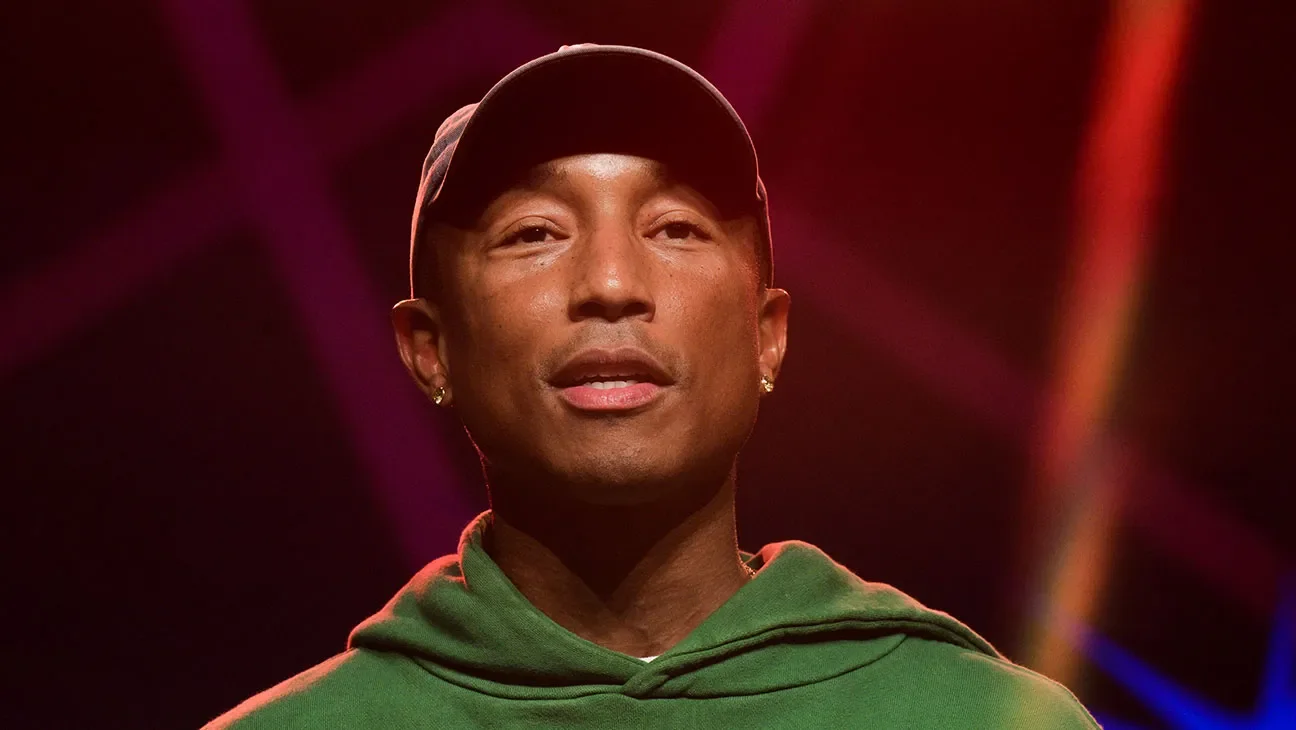
There’s a particular kind of cultural power that doesn’t come from inventing a sound or shifting the future. It comes from being accepted. Formally, publicly, with applause from the right rooms. Pharrell Williams has always known how to walk into those rooms.
Pharrell has always been an employee of the idea of prestige. As someone who seems to genuinely believe that the highest version of hip-hop is the version that can be framed, certified, priced, and seated next to old money without making anyone uncomfortable.
That’s why, when Louis Vuitton named Pharrell the men’s creative director in 2023, the news didn’t feel like an experiment. It felt like a coronation of a specific type of Black cultural figure. And it’s why his growing portfolio reads less like “artist” and more like “prestige institution whisperer.”
Tiffany & Co. didn’t just collaborate with him; it built out a named jewelry line around him. Titan. Positioned with mythic language, luxury materials, and the kind of “rebellious creativity” branding that lets a heritage house cosplay edge without ever risking its inheritance. Pharrell isn’t merely adjacent to these institutions. He’s their ideal company man: smiling, consistent, brand-safe, “visionary” in a way that never threatens the balance sheet.
And the deeper question is what that means for hip-hop. Because hip-hop’s relationship with prestige institutions, especially the white ones that gatekept taste for decades, has never been simple. The Grammys are the cleanest example: a system that has long been criticized for how it recognizes (and segregates) Black music, even as it profits from it.
Yet Pharrell is also a Grammy world creature. He’s a 13-time Grammy winner, fluent in the language of awards, palatable excellence, and industry consensus. The Recording Academy loves the kind of Black artist it can brand as “universal.” The kind who seems to need the institution as much as the institution needs him. And Pharrell, more than almost anyone in hip-hop’s modern arc, has made a career out of mutual legitimacy.
Here’s the tension: we’re living through the slow weakening of the very institutions Pharrell keeps elevating.
Award shows are not what they were. Even as the Grammys remain a big TV property, their audience has been uneven and the trend line is a reminder that “cultural authority” doesn’t hold the way it used to. In 2026, the Grammys averaged about 14.4 million viewers, down from the year prior—good by modern awards-show standards, but still a symbol of contraction compared to the era when these ceremonies felt like national holy days. And the Grammys are literally moving networks in 2027 under a Disney deal—an unmistakable sign that “prestige” now travels through corporate distribution channels the same way everything else does.
Fashion houses are also not what they were. Luxury is celebrity creative direction, a brand laundering relevance through a famous person’s cultural credibility. Which is exactly why Pharrell is so valuable to them. He carries hip-hop into rooms that historically treated hip-hop like a loud cousin they didn’t want at the table until the cousin started making money.
His appointment at Louis Vuitton is a perfect symbol of this era: streetwear energy, Black cultural influence, and contemporary celebrity all being used to refresh a legacy house that still sells the fantasy of French tradition.
But here’s what’s worth interrogating: is Pharrell elevating hip-hop by bringing it into prestige institutions or is he helping prestige institutions domesticate hip-hop? Because there’s a version of “crossover” that’s just expansion: a Black artist moves freely, takes resources, builds new things, and never asks permission. And then there’s the version that looks like assimilation: hip-hop’s legitimacy becomes something you receive from old institutions rather than something you generate yourself.
Pharrell often feels like the second version. He doesn’t present hip-hop as a culture that can outgrow these legacy rooms. He presents it as a culture that should finally be recognized by them, awarded by them, dressed by them, seated beside them, crowned by them.
That posture is subtle, but it matters. It teaches younger artists that the top of the mountain is still the same mountain. To him, it’s still the Grammys, still Paris, still the Met, still the gatekeepers with the glossy magazines and the heritage logos. And yes, Pharrell is also literally part of that world. He’s served as a Met Gala co-chair, moving through the most symbolic room of fashion prestige like he belongs there because now he does.
None of this is to deny his talent. Pharrell has always been an architect of sound and vibe, a maker of the kind of pop-rap-funk minimalism that changed the texture of radio. He’s not an impostor. He’s not an opportunist in the cheap sense. He believes in institutions. He believes that the museum matters, the fashion house matters, the awards matter.
That’s why I call him prestige’s favorite ambassador. He doesn’t merely enter the institution; he reaffirms the institution. He makes it feel current without forcing it to confess its past. And that is the uncomfortable part: the institutions get rejuvenated, but the culture gets tethered.
Hip-hop has spent the last decade proving it doesn’t need permission. The charts and slang are hip-hop. The world borrows from it automatically. The culture already won the war that prestige institutions used to adjudicate. So why keep acting like those institutions are the final validators?
Why keep treating a Grammy like proof of greatness when the hip-hop community itself has spent years arguing that the Grammys don’t understand the culture’s internal standards or, worse, understand them and still refuse to honor them consistently? Why keep treating a French luxury house like the ultimate platform for Black style when Black style has always been the origin, and luxury has often been the extractor?
The defense of Pharrell is obvious: he’s playing the game at the highest level, moving capital toward Black creativity, putting Black aesthetics in rooms that used to exclude them. Sometimes the best way to change the institution is from inside. And he is not the first to do this. Virgil Abloh’s tenure at Louis Vuitton already proved how powerful that inside position can be. But even that defense has a shadow: inside-change can become inside-compliance. The institution absorbs you, not the other way around.
Your presence becomes the proof that it’s “evolved,” whether or not it has. That’s the trap of prestige: it doesn’t only reward you. It recruits you. And Pharrell, more than almost any hip-hop figure of his stature, seems comfortable being recruited. He’s not the rebel that storms the palace. He’s the one who gets knighted, then convinces everyone else the palace is still where meaning lives.
Which brings us back to my point: forcing hip-hop to stay attached.
Nobody can literally force a culture. But powerful figures can shape its imagination. They can set the default aspiration. They can quietly tell the next generation, “This is what the top looks like.”
If the top still looks like the Grammys, and Paris fashion week, and Tiffany, and the Met, then hip-hop remains psychologically colonized by institutions that have always had a complicated relationship with Black art, celebrating it in controlled doses, commodifying it endlessly, and resisting it whenever it becomes too politically alive or aesthetically disobedient. Pharrell’s genius may be that he can make those institutions feel like they love us. The harder truth is that they’ve only loved what they can sell.