

Near-Death Experiences and the Afterlife: The Sacred Edge
Miasha Gilliam-El’s story begins the way so many spiritual awakenings begin in modern life, not in a temple, but in a driveway. In Midlothian, Virginia, she fell to her knees, suffocating. She was lifted into an ambulance, then into a hospital room where strangers moved with urgent intimacy, cutting away her clothes to assess her breathing. Then she blacked out.
What came next, she says, was not darkness.
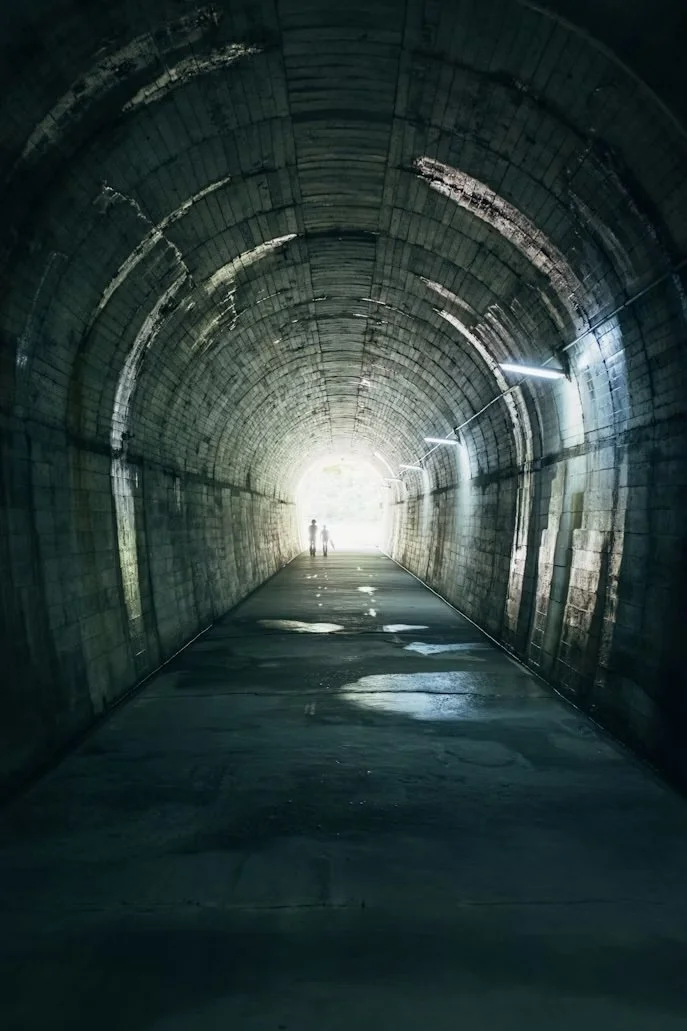
She recalls looking down at her own body from above, watching chest compressions, watching the drama of resuscitation unfold like a scene she was no longer trapped inside. She remembers seeing herself flatline, feeling her breathing stop, and then being “transitioned” elsewhere, drawn into a tunnel that felt strangely peaceful. She describes holding someone’s hand and hearing scripture, a looping line from Psalm 23, “Yea, though I walk through the valley…,” as if her mind had turned into a sanctuary at the exact moment her body became a battleground.
Gilliam-El suffered a rare condition called peripartum cardiomyopathy, a weakening of the heart muscle that can occur late in pregnancy or after childbirth. But the medical label doesn’t touch the question her experience leaves behind. It’s the question the living keep asking in different accents: If the body fails, does anything remain?
This is why near-death experiences don’t stay in hospitals. They migrate. They show up at dinner tables, in grief circles, in prayer rooms, in late-night phone calls after a funeral. They don’t just ask what death is. They ask what consciousness is, what meaning is, what we are when the world’s loudest proof, the body, goes quiet.
Now the scientists are trying to meet the mystery where it lives.
In a major review published in Nature Reviews Neurology, neuroscientist Charlotte Martial and an international team synthesized around 300 papers and built a model called NEPTUNE to explain common features of near-death experiences on a neurobiological level. Their focus is the pattern: the out-of-body vantage point, the tunnel, the bright light, the deep peace. Near-death experiences raise pr… If those motifs recur across cultures and crises, then perhaps the brain, under extreme stress, follows a kind of universal script.
NEPTUNE roots that script in physiology. The researchers examined what happens in the brain’s blood vessels during cardiac arrest: oxygen levels dropping, carbon dioxide rising, chemistry shifting, the nervous system flooding and scrambling to preserve life. They also cited studies suggesting that sensations resembling out-of-body experiences may be generated in a region called the temporoparietal junction, a high-level hub for processing sensory information and helping the brain distinguish “self” from “other.” In this account, the miracle is not supernatural. It is the brain doing what it does best, even at the cliff’s edge: constructing a coherent world when coherence is threatened.
And yet, the spiritual world does not surrender that easily, because the spiritual world is not only a set of claims. It is also a set of recognitions.
Greyson and Pehlivanova argue that a purely physiological explanation does not account for the totality of what people report, and they criticize NEPTUNE’s authors for omitting evidence that doesn’t fit the model. They point out that lab-induced illusions through electrical stimulation are “nothing like” the vivid encounters with identifiable deceased people described in many near-death experiences, encounters that involve seeing, hearing, even touch and scent, not a vague sense of presence.
This is where Being Centered has to say something plain: the argument isn’t really about tunnels. It’s about what we are allowed to call real.
Science, at its best, wants mechanisms. Spirituality, at its best, wants meaning. The modern age tries to force us to pick one, as if the heart can only hold one kind of truth at a time.
But even the reporting makes clear that the fight among researchers is not simply “believe” versus “debunk.” It’s a methodological and philosophical dispute over evidence. Greyson and Pehlivanova say the NEPTUNE team too quickly dismisses testimony from patients and supporting observations from hospital staff, including details as specific as how many people were in the room during resuscitation. In other words, the debate is partly about whether human witness counts as data when the human mind is the very territory being studied.
Kevin Nelson, a neurologist and co-author on the NEPTUNE paper, names the temptation that makes this topic radioactive. He describes these stories as “seductively powerful narratives” that feed our deepest longing for consciousness beyond death. He admits he shares that hope, but says science keeps him from surrendering to it.
That’s an honorable stance, and it’s also a revealing one, because it admits what a lot of our culture hides: many skeptics are not cold. They are careful. They are afraid of being fooled by the very thing they want to be true.
Greyson pushes back with something equally honest: every scientific discovery begins with subjective observation before it can ever be tightened into controlled experiment. And he and Pehlivanova argue that, alongside testing NEPTUNE, researchers should remain open to other causes not yet understood. Near-death experiences raise pr…
So, we are left with a tension that feels spiritual in itself: the call to humility.
Part of what makes near-death research difficult is time. Most studies have been retrospective, going back to patients after the fact, which opens the door to memory drift and social reinforcement as people share and reframe their stories. Martial says she and colleagues are attempting something more rigorous, a prospective study tracking patients from the moment they enter the resuscitation room, using video and EEG recordings of brain activity.
And Martial offers a sentence that should rewire how we talk about death. She says dying is a process, not a single event. Oxygen drops, brain activity decreases, sometimes there’s a rise in electrical activity, and then the flatline.
That doesn’t prove heaven. It doesn’t disprove it either. It simply reminds us that the boundary we speak about so casually is not a wall. It is a corridor with phases, thresholds, gradients.
Which brings us back to Gilliam-El. Her near-death experience ended when she heard a powerful voice tell her, “Not yet,” and she felt herself return, blurry, back in the bright hospital room. And she feared that if she spoke about it, no one would believe her.
That fear is one of the saddest details in the whole story, because it reveals what we have done to mystery in the modern world. We have made people feel ashamed for carrying something holy. We have trained them to swallow their own awe so they don’t look naïve.
But here is a more spiritual way to read what the reporting shows.
If you are a person of faith, you might see these stories as mercy, little windows cracked open so the living can breathe. If you are not religious, you might still recognize the pattern: people come back less afraid to die, more interested in spirituality, more empathetic, their lives reoriented by what they felt. Whatever the mechanism, the effect looks like transformation. And transformation is one of the clearest fruits we have, whether we call it psychology or grace.
I don’t think Being Centered needs to “solve” the afterlife to honor what’s happening here. The better question is: what kind of society do we become if we treat these stories with reverence instead of ridicule, with discernment instead of dismissal?
We can hold two thoughts at once.
We can respect the brain, and still refuse to reduce the human spirit to a chemistry lesson. We can demand rigor, and still admit that the most important things we have ever known arrived first as experiences, not equations.
Near-death experiences sit at the intersection of science and the sacred, and maybe that’s the point. Maybe they are reminders that the world is larger than any single language we use to describe it. And maybe the most honest posture is this: to listen closely, to test carefully, and to stay awake to wonder.