

Pam Bondi’s Day in the Furnace: The Hearing That Broke Washington
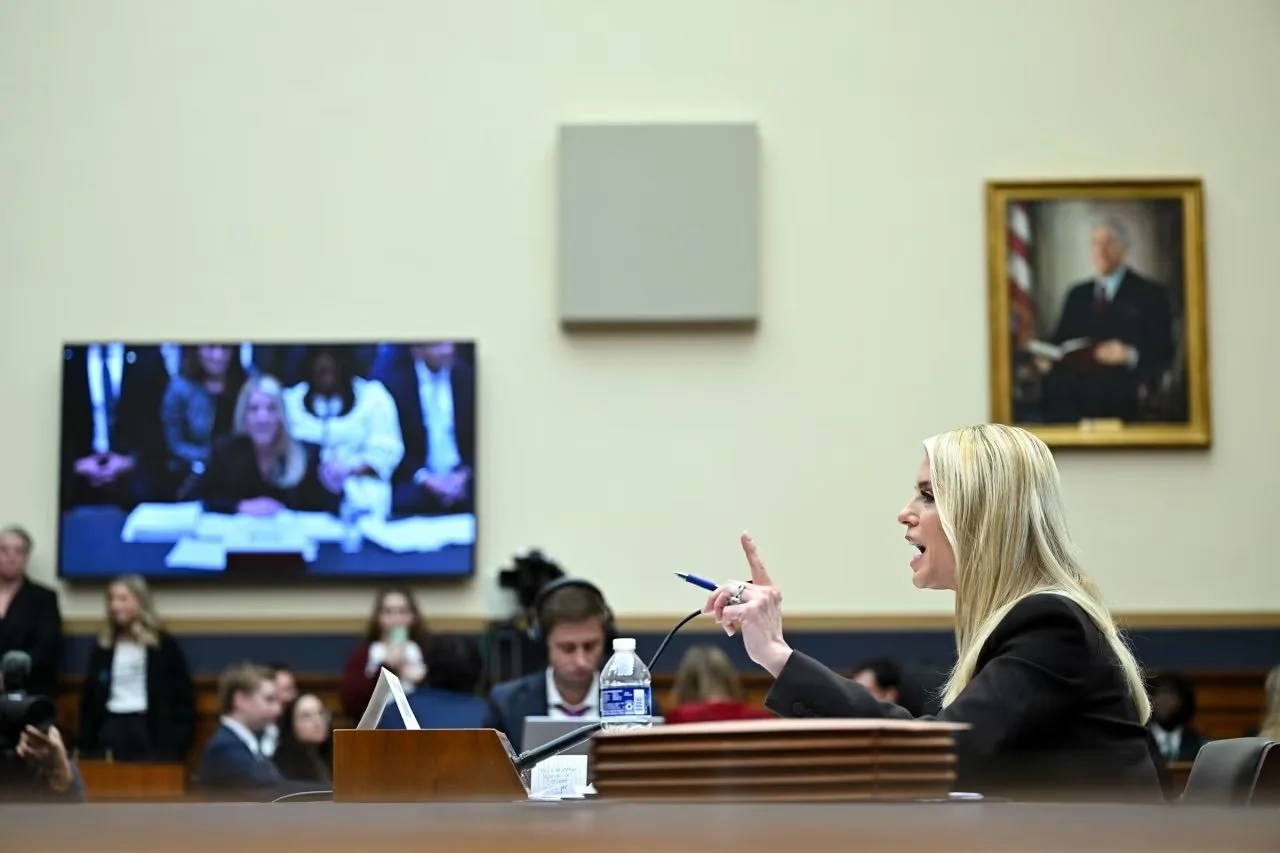
Washington loves a good hearing the way Hollywood loves a good sequel: familiar characters, familiar stakes, familiar camera angles—and the promise that *this time* the truth will finally crack the marble.
That’s what made Attorney General Pam Bondi’s appearance before the House Judiciary Committee feel less like oversight and more like an event. Officially, the session was titled “Oversight of the U.S. Department of Justice,” held in Rayburn, with Bondi as the witness. Unofficially, it was a referendum on power, secrecy, and the modern political economy of outrage—ignited, yet again, by the Jeffrey Epstein files.
People will reach for the biggest comparisons because Washington trains us to. Watergate. Benghazi. Moments when the country’s attention collapses into one room and everyone pretends that a microphone can function like a polygraph. Bondi’s hearing wasn’t a carbon copy of those eras. But it *did* share something with them: the sense that public trust itself was the subject on trial, and that both sides believed the other was trying to rewrite the record in real time.
Sometimes the performance is the point. Sometimes the way institutions behave under pressure tells you more than the words they say. Sometimes the refusal to answer, the insistence on procedure, the contempt that slips through a practiced smile, the decision to insult rather than explain, the choice to treat oversight like warfare, sometimes those things are the revelation.
Because a nation’s confidence does not collapse all at once. It collapses in scenes.
The fuse: the Epstein files, the redactions, and the question of who gets protected
The immediate backdrop was the Justice Department’s recent, massive release of Epstein-related material. Millions of pages. An avalanche that satisfied nobody: too much for people who wanted restraint, too filtered for people who wanted transparency, and too messy for survivors who have spent years watching institutions mishandle their names and their pain.
That tension walked into the hearing room with Bondi. It wasn’t just Democrats pressing her. Reporting out of the hearing described frustration on the redactions and allegations that names of powerful Epstein associates were still being concealed, with the department pointing to legal privileges and other constraints. And layered beneath that was the ugliest irony: the recurring claim that victims’ identities were not always protected with the same zeal as the powerful.
If you want to understand why the hearing felt “explosive,” start there. Epstein isn’t just a criminal story; he’s a symbolic story—about wealth that moves like vapor through institutions, about people who suspect the system always knows exactly who to shield, and about a public that has spent years being told “nothing to see here” while the smoke keeps leaking through the vents. Reuters captured the core allegation in plain terms: lawmakers accusing Bondi and DOJ of hiding names; DOJ insisting it has been transparent within legal limits.
When oversight turns into combat: the insult, the shouting, the clip
Then the hearing did what hearings do now: it became television.
At one flashpoint, Bondi and Rep. Jamie Raskin traded barbs that ricocheted instantly across the internet, including Bondi calling him a “washed-up, loser lawyer,” as members argued over time and procedure and what counted as legitimate questioning. The exchange mattered less for its substance than for what it revealed: Congress and the executive branch no longer treat each other like co-equal institutions with different incentives. They treat each other like rival channels fighting for the same audience.
That’s why the hearing felt “legendary” to some viewers. Not because a single line changed the law in that room, but because the tone announced a new baseline: contempt as governance style, outrage as proof of authenticity, and viral moments as the closest thing we have to “wins.”
The argument under the argument: is DOJ a department—or a weapon?
Zoom out and you can see the deeper trench warfare. Bondi’s critics accuse her of politicizing the Justice Department and using it to protect allies and punish enemies; Bondi and her defenders argue the opposite—that DOJ is being unfairly maligned and that prior administrations weaponized the system first.
This is the same meta-fight that has swallowed American politics for years: the battle over whether institutions are neutral referees or just another team in uniform. And unlike a policy debate, it’s not resolvable with a bill. It’s resolvable only with legitimacy—and legitimacy is exactly what’s draining out of the pipes.
House Judiciary Democrats later framed the hearing as Bondi refusing to answer key questions and leaning into personal attacks. Republicans, meanwhile, treated the session as evidence of a hostile opposition more interested in performance than in fact-finding. (Even that split—oversight vs. spectacle—became part of the spectacle.)
The twist that made it feel like a scandal: “search history” and the scent of surveillance
If the hearing had ended as a shouting match, it would have been just another Wednesday in Washington’s new content economy.
But it didn’t. A second storyline hardened quickly: allegations that DOJ had tracked—or appeared to track—lawmakers’ searches while they reviewed unredacted Epstein material. TIME reported on members accusing DOJ of monitoring their research activity, and AP later reported that Raskin requested an inspector general investigation into what he described as “spying,” while Speaker Mike Johnson said it would not be appropriate for DOJ to track lawmakers’ searches. CBS also reported on the same controversy, describing Bondi having a list of a lawmaker’s Epstein-files “search history.”
Whether this ultimately proves to be routine logging, a security protocol, a misunderstanding, or something darker is exactly the point: in 2026, almost nobody trusts the benefit of the doubt. Once you introduce “surveillance” into a fight already fueled by secrecy and elite protection, you’ve added jet fuel.
That is the closest thing this moment has to the Watergate/Benghazi comparison people are reaching for. Not the specific factshistory is allergic to repeats, but the emotional structure:
1) A scandal-shaped story the public already believes in.
2) A powerful institution accused of hiding what matters.
3) A hearing that becomes the public’s theater for moral judgment.
4) A secondary allegation (cover-up, spying, abuse of process) that feels like confirmation of the worst suspicions.
Why this hearing landed like a cultural event
Bondi’s hearing wasn’t just “arguments a plenty.” It was a collision of three American crises happening at once:
First, the crisis of information overload. Millions of pages, endless binders, constant “drops,” constant promises of the next revelation. When everything is disclosed, people feel nothing is clarified.
Second, the crisis of institutional trust. Oversight is supposed to be how democracy cleans its own windows. But if half the country believes the cloth is dirty and the other half believes the glass is rigged, the act of “cleaning” becomes another form of fighting.
Third, the crisis of *incentives*. Hearings used to be a tool. Now they’re also a product. Clips, reactions, fundraising emails, podcast segments, influencer takes. A five-hour session can generate five days of media oxygen even if it produces zero legislation.
This is why the room felt so hot. Everyone inside it knew that the real jury wasn’t seated behind the dais. The jury was scrolling.
What happens next?
The formal next steps are straightforward: requests, letters, inspector general inquiries, follow-up hearings, and more pressure on DOJ about redactions, victim protections, and the mechanics of how lawmakers are allowed to review sensitive material. The political next steps are just as predictable: both sides will keep selling this as proof that the other side is corrupt.