

Gavin Newsom’s Anti-Trump Act Isn’t a Platform
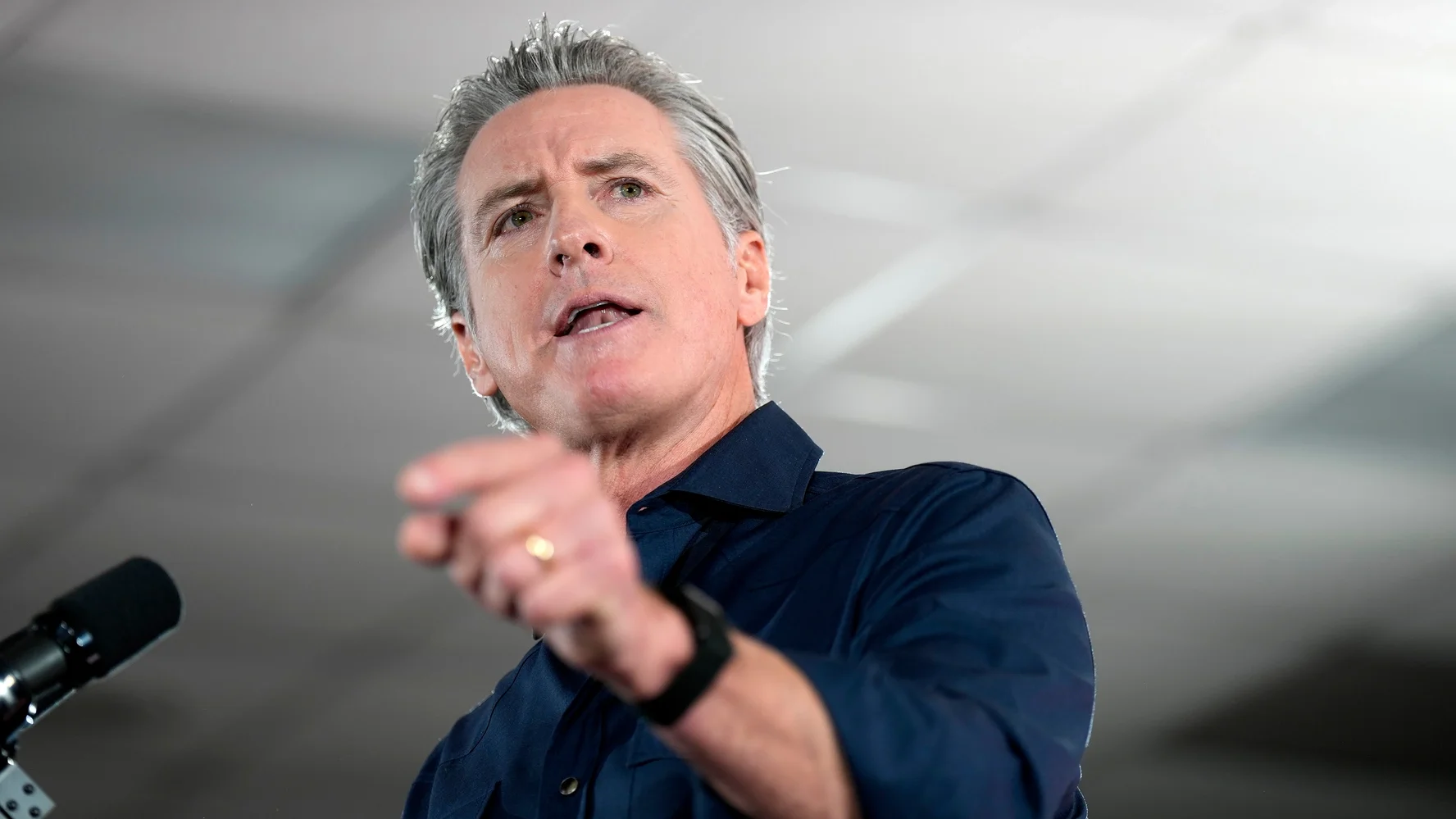
For months now, Democratic Party watchers have been treated to the same show: Gavin Newsom steps to a microphone, aims at Donald Trump, and fires. The lines are sharper lately. Snarky social posts, rhetorical body blows, a posture of permanent resistance.
If the goal is to become the party’s national weapon, its most visible foil to a president who dominates attention, then Newsom’s strategy makes sense. Commentators have even framed it as an intentional audition for 2028: build stature by being the loudest, quickest, most media-fluent antagonist in the room.
But if the goal is to lead a country, not just heckle the man currently leading it, then this approach starts to look like a campaign without a thesis.
The problem isn’t that Newsom has no policies. It’s that he doesn’t offer a governing story for America.
Let’s get the obvious out of the way: Newsom does have a policy record. As governor of California, he can point to a long list of initiatives on health care affordability and access, housing and homelessness, climate and zero-emission targets, and more.
So “no policy position” isn’t literally true. The sharper critique is this:
Newsom hasn’t clearly translated his record into a national agenda that feels specific, risky, and morally legible. The kind of platform that tells voters what you’re for, not only who you’re against.
Right now, he’s mostly selling mood: I can fight Trump. I can embarrass him. I can stand up to him.
Mood is not a plan.
Anti-Trump politics has diminishing returns
Opposition can be energizing. It can also be lazy.
When your central message is “Trump is dangerous,” you inherit two problems:
You’re letting your opponent define your brand. If Trump isn’t on the ballot tomorrow, what are you selling the country besides a vibe of resistance?
You’ve made negativity the organizing principle. Voters eventually ask: Okay—then what? What do you actually want to build?
Newsom’s own media strategy underscores this risk. Reports describe a deliberate effort to raise his national profile by waging a kind of ongoing media war—especially online—against Trump. That may win attention. It does not automatically win trust.
The “don’t rock the boat” instinct
A real platform creates enemies—sometimes inside your own coalition. It demands that you rank priorities, disappoint someone, and risk being called extreme, naïve, or “out of touch.”
Newsom often reads like someone who understands that basic political truth and is choosing avoidance anyway.
The clearest example is how he appears to be testing the temperature on culturally explosive issues, trying to locate the safest possible center of gravity. In March 2025, he drew backlash after agreeing with conservative activist Charlie Kirk on transgender participation in girls’ sports—an episode widely interpreted as a repositioning move with national implications.
You can defend his point substantively or reject it. Either way, the politics are plain: this is what it looks like when a Democrat with presidential ambition starts sanding down the edges—seeking “middle-of-the-road” posture on the issues most likely to trigger backlash in a general election.
And that leads to the bigger question: Is he evolving, or triangulating?
Because voters can smell the difference.
Why this feels like a layup to him
Newsom’s behavior also communicates something else: confidence that the lane is basically open.
The party’s bench has talent, but not clarity. After major losses, parties frequently drift—unsure whether to double down, reinvent, or split the difference. Coverage of the Democrats’ post-election landscape has described a wide-open contest without an obvious standard-bearer.
In that vacuum, Newsom’s calculation is simple:
Be the most visible Democrat.
Be the most fluent anti-Trump messenger.
Avoid policy commitments that could fracture donors or alienate swing voters.
Arrive at the nomination with minimal scars.
That’s how you run if you believe the nomination is about positioning more than persuasion—and if you believe Trump hatred is the one coalition glue you can count on.
It’s a rational strategy. It’s also how you end up with a campaign that feels like a marketing rollout.
The “man alone on an island” vibe
There’s something else worth naming: Newsom often appears like a solo operator—more like a national brand than a party collaborator. Whether that’s fair or not, it’s reinforced by the way his biggest moments are frequently framed: Newsom vs. Trump, Newsom confronting elites, Newsom trolling, Newsom taking the fight directly to the president.
That lone-warrior framing can look strong. It can also look politically detached—a man performing leadership without doing the unglamorous work of coalition-building in public.
And if the core pitch is “I’m the anti-Trump,” he doesn’t need a governing team on stage beside him. He only needs an enemy.
What he would need to say to feel real
If Newsom wants to be more than the party’s best clapback, he needs a platform that:
Picks 3–5 fights that are bigger than culture-war weather,
Costs him something (because sincerity has a price),
Can be summarized in one sentence that isn’t about Trump.
Here are examples of the kinds of commitments that would change the perception overnight—because they would force specificity:
Housing affordability as the central economic mission (zoning reform, building targets, permitting overhauls, and a national affordability compact), rooted in the idea that “rent is the new inflation.”
A health-cost agenda that’s felt at the pharmacy counter (drug pricing, emergency care billing reform, mental health capacity), building off California’s affordability messaging.
A climate plan framed as jobs + insurance + cost of living (less apocalypse branding, more household math)—a message he has publicly flirted with in international settings.
A democracy and governance package that treats institutional trust as a material need (ethics rules, anti-corruption enforcement, election administration protection).
A clear doctrine on tech and AI (deepfakes, labor displacement, surveillance limits)—because the next presidency will be defined by it whether candidates like it or not.
None of that requires becoming a radical. It requires becoming legible.
The real indictment: he’s campaigning like a commentator
Right now, Newsom often sounds like he’s auditioning for the role of America’s most effective Democratic critic—sharp, telegenic, endlessly reactive.
But presidents aren’t hired to criticize. They’re hired to choose.
If Newsom wants to win—if he wants to lead—he’ll have to risk being disliked for what he believes, not merely liked for who he mocks. The country doesn’t just need a counterpuncher.
It needs a builder.