

A Knight of the Seven Kingdoms Review (Episodes 1–3): A Slow-Burn Westeros Surprise
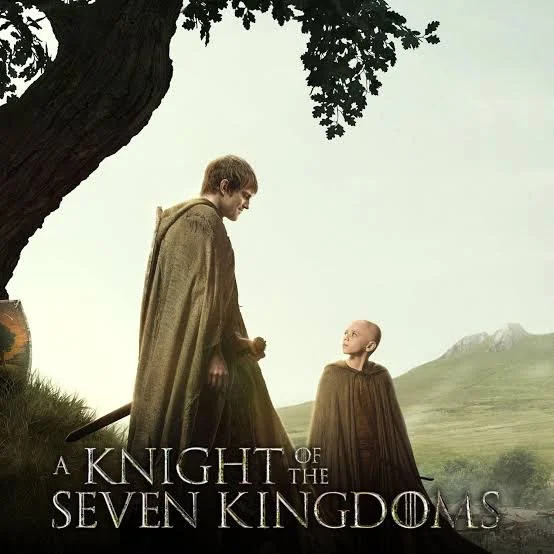
I went into A Knight of the Seven Kingdoms with the kind of confidence that only a Game of Thrones veteran can have: I know the families, I know the feuds, I know the cost of ambition in Westeros. I thought I knew the world.
The first three episodes gently prove that I mostly knew the headline version of it.
This is Westeros at ground level, where legend is something you chase on foot, where knighthood is as much hunger and embarrassment as it is oaths and steel, and where “the realm” looks less like a map and more like a muddy field outside a tournament town. I’ve never read the source material, so I didn’t arrive with the usual prequel checklist. No lore-policing. No “they changed my favorite line.” Just the surprise of discovering that the best way back into a familiar universe isn’t always through bigger spectacle. Sometimes it’s through a slower, lived-in story that trusts the texture of everyday life.
And that’s the strange magic of these opening chapters: they don’t sprint. They settle. They let you listen to the clink of harness straps, the low gossip at an inn, the little humiliations that build a man’s spine.
By the time Episode 3 ends, you realize the show has been doing something patient and deliberate: it’s been making you care about two people before it dares to make you fear for them.
Episode 1: “The Hedge Knight” — the world shrinks, and that’s the point
The premiere begins with a quiet truth that Thrones rarely lingered on: people die and the world doesn’t pause to honor them. Dunk buries Ser Arlan of Pennytree, the old hedge knight he served, and what should feel like a handoff of destiny instead feels like a handoff of debt. Sword, shield, horses, and the terrifying freedom of having no one above you anymore.
From there, the episode does something crucial. Instead of throwing us into court politics, it sends Dunk down the road toward Ashford and an upcoming tournament, where legitimacy is a currency and he doesn’t have enough of it. He’s not “Ser Duncan” because the world recognizes him. He’s “Ser Duncan” because he needs to survive what comes next.
Then comes Egg, the bald kid who wants to squire and talks like he’s already read the storybook version of who Dunk is supposed to become. Dunk refuses him at first, of course, because this show understands pride: the kind that comes from having nothing and needing to guard the little you’ve earned.
What hit me here wasn’t plot. It was tone. The episode is almost allergic to grandstanding. It’s interested in the small gears that make Westeros turn: gatekeepers, stewards, patronage, the way a man can be brave and still be invisible. When Dunk struggles to find someone to vouch for him, you feel the cruelty of a society where status is inherited and “honor” is often a story rich people tell each other.
And in the background, the show keeps threading in a kind of humble wonder: a puppet show with a fire-breathing dragon, a moment of feasting and dancing, a shooting star taken as luck. Those details do more worldbuilding than a thousand history lessons. They remind you that Westeros isn’t only war rooms and execution blocks. It’s also performance, superstition, hunger, flirting, and people trying to laugh before the next hard season.
Episode 2: “Hard Salt Beef” — legitimacy, class, and the cost of the costume
Episode 2 deepens the theme the premiere planted: who gets to be real here? Dunk eulogizes Arlan to nobles and tourney folk who mostly don’t remember him. The reality lands like a stone. A decent man can live a decent life and still leave no imprint on the powerful.
Then the Targaryens arrive, and the show uses them smartly. Not as fireworks, but as pressure. Their presence immediately changes the air. Kingsguard scrutinize Dunk’s claim to knighthood. The realm’s pageantry shows its teeth.
But the episode doesn’t turn into a royal parade. Instead, it keeps returning to the practical problems that make this story feel tactile: Dunk needs a coat of arms, he needs armor, he needs to look like the thing he says he is. Baelor Breakspear vouches for him and tells him to create his own arms, which is more than a plot point.
It’s the show’s thesis: if you weren’t born into meaning, you have to manufacture it, and the manufacturing costs.
There’s also a softness to this 30 minutes that I didn’t expect from a Westeros story: Dunk watching Tanselle’s puppet performances, the awkwardness of attraction, the way camp life becomes a temporary city of strangers. ( Even the tug-of-war bit feels purposeful. It’s physical comedy, sure, but it’s also communal. It shows a world where people still have games, still have afternoons, still have lungs left to laugh.
By the end, Dunk sells a horse to afford better armor. That choice is so quietly devastating because it’s the opposite of fantasy wish-fulfillment. It’s a reminder that “becoming a knight” isn’t a glow-up montage. It’s compromise, trading one future for another.
Episode 3: “The Squire” — the show “begins” when the stakes turn personal
If Episodes 1 and 2 are the slow inhale, Episode 3 is the first exhale that feels sharp.
It opens with Egg training Dunk’s warhorse while Dunk sleeps, and the show is practically winking at us: this kid knows too much, moves too confidently, carries himself like someone who grew up around power. Then a one-eyed knight confronts Egg about whether the horse was stolen, and suddenly the day-to-day texture is laced with danger.
The tournament begins, and with it comes the episode’s most important undercurrent: Dunk’s fear that he’s destined to be forgotten, just like Arlan. That fear is what makes him sympathetic. He’s not chasing glory because he’s greedy. He’s chasing it because obscurity feels like a kind of death.
Then the show tightens. Plummer offers Dunk a rigged joust against Lord Ashford’s son to help recoup the tournament’s costs. It’s such a Westeros move: the realm isn’t only violent, it’s transactional. Even honor has invoices.
And then Aerion Brightflame reminds everyone what a prince can get away with. In a joust, he acts dishonorably and mortally wounds an opponent’s horse, enraging the crowd. That moment is more than cruelty for cruelty’s sake. It’s the show saying: the old awe is gone. The dragons are gone. People are starting to look at the royal family and see not divinity, but entitlement.
Finally, the show drops the revelation that flips the entire series from “small story” to “small story with a fuse attached”: Egg is Aegon Targaryen, one of Prince Maekar’s missing sons.
This is why I agree with the feeling that after Episode 3, the show actually begins. The first two episodes teach you what it means for Dunk and Egg to be together: a hungry knight and an insistent kid, surviving by grit and personality. Episode 3 tells you what that relationship costs once the world notices them.
Because now, every small choice echoes upward. Dunk isn’t just protecting an annoying squire. He’s walking around with royal blood beside him. And Egg isn’t just playing at being common. He’s choosing, for reasons we’re only starting to understand, to step out of the gilded cage.
The best part is that the show earns this turn without betraying its pace. It doesn’t suddenly become a different series. It simply reveals what was always hiding inside the quiet: that the road is political, that poverty is political, that a good man in the wrong place can spark a crisis just by refusing to be humiliated.
Why these three episodes work (especially if you didn’t read the books)
As someone coming in without the source material, what I appreciated most is that the show doesn’t treat newcomers like tourists. It doesn’t dump lore to prove it’s connected to the larger franchise. It trusts the audience to feel the world through behavior and consequence.
Westeros here isn’t a chessboard. It’s a lived environment. You can smell it. The food is plain. The jokes are rough. The kindness is rare but real. And the violence, when it arrives, feels uglier because the show has spent time letting you enjoy the ordinary.
Most importantly, Dunk and Egg don’t feel like prequel memorabilia. They feel like a classic pairing built for television: the big man with a moral compass that keeps getting him in trouble, and the small boy with secrets and nerve.
By Episode 3, their bond has stopped being cute and started being consequential.
That’s why the slow start isn’t a flaw to me. It’s the investment.
The first three episodes build a floor strong enough to hold what’s coming. And if the series keeps honoring that same principle, this could end up being the rare Westeros story that doesn’t need to out-shock its predecessors. It just has to keep being true to its scale: two travelers, one road, and a world that punishes decency the moment it becomes inconvenient.