

Kendrick Lamar’s ‘GNX’: Album of the Year Bid or Narrative Power Play?
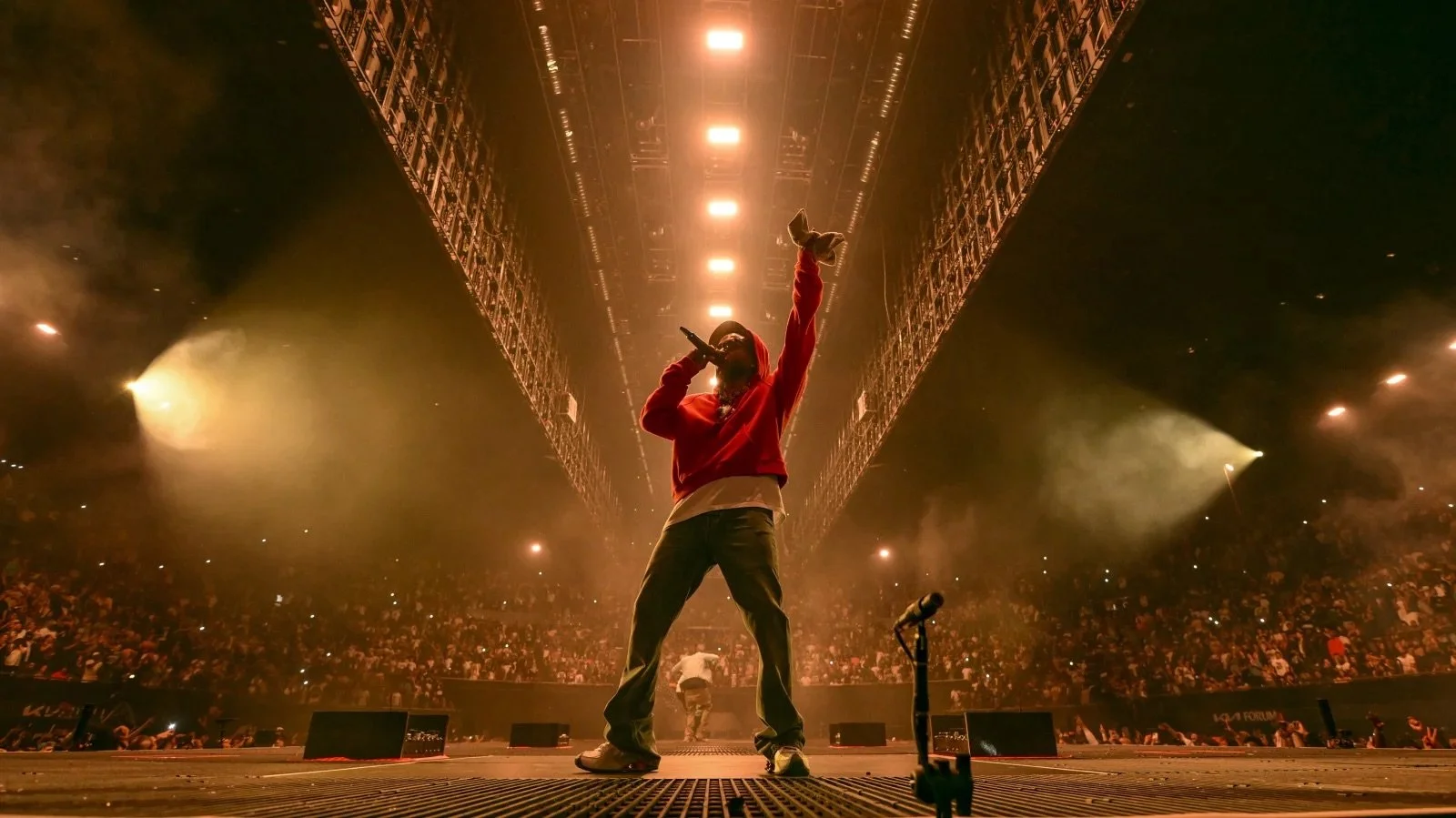
At the 2026 Grammys, Kendrick Lamar’s *GNX* is nominated for both Album of the Year and Best Rap Album, with Lamar leading all artists at nine nominations overall. If *GNX* were to win Album of the Year, it would join a tiny group of rap projects to take the top prize and extend a run in which every Lamar studio album since *good kid, m.A.A.d city* has been treated as a major cultural event.
On paper, this is coronation season: institutions, peers, and voters all converging to affirm Lamar as the era’s definitive rapper. *GNX* understands that context and writes directly into it. It is not just another release; it’s the centerpiece of a moment where Lamar is, statistically and symbolically, the most validated rapper in the field and the album moves like it knows that reputation is both armor and evidence.
Rather than play like closure, *GNX* arrives as Lamar’s structured response to the narratives that Drake’s “Family Matters,” “Push Ups,” and “Taylor Made Freestyle” helped circulate: that he’s trapped in bad deals, propped up as an “industry darling,” hiding behind moral performance, brittle about status, privately unstable. The album doesn’t function as a fact-check sheet or a linear rebuttal. Instead, it stages an alternate version of events and leaves listeners to decide whether it clarifies, evades, or quietly confirms elements of the criticism. Its argument is artistic before it is literal: if you want to know who I am, follow the design.
The frame is symbolic from the jump. Named after the Buick GNX, the album leans into Lamar’s personal mythology — 1987 birth year, family lore, West Coast car culture. The cover and performances keep returning to that specific machine: a limited-run vehicle whose value depends on documented provenance and intact paperwork.
In a feud obsessed with forged narratives, NDAs, AI voices, and unverifiable leaks, anchoring the project in an object associated with traceability and title feels deliberate. It doesn’t hammer home a singular metaphor, but it sketches how Lamar wants to be seen at this stage: as someone whose lineage is certified, whose work and name are on the documents.
That self-portrait extends the spiritual and ethical preoccupations of *Mr. Morale & The Big Steppers*: faith, guilt, harm, responsibility, ego, lineage. The continuity cuts two ways. One reading says: this isn’t branding, it’s compulsion; he’s still turning over the same wounds in public, which undermines the idea that his moral posture is purely opportunistic. The other reading says: precisely because those themes have become his reliable mode, their repetition in the shadow of allegations feels like performance — a great writer returning to a profitable register while the off-record mess is left largely off-page. *GNX* refuses to resolve that tension. It banks on the archive. The run of albums, the consistency of voice.
The handling of Dave Free and “industry puppet” accusations follows that same logic of implication over paperwork. Drake’s disses leaned heavily on rumors about Lamar’s contracts and inner circle, implying exploitation and compromised autonomy.
Drake’s shots set the stakes. In “Push Ups,” the “drop and give me 50” refrain and the jabs about Maroon 5 and Taylor Swift frame Kendrick as an extorted asset, overexposed to white pop markets at his label head’s command. *GNX* arrives via pgLang/Interscope with Lamar and Free visibly credited as co-architects; “heart pt. 6” folds that partnership into a longer story of Black Hippy’s stalled possibilities and Lamar’s own choices. From the opening instruction to roll the session, to casting Punch as his Phil Jackson, to remembering Jay Rock’s deal as a collective win, he walks us through his provenance like a man annotating his own paperwork. The track’s relaxed swing, slightly behind-the-beat phrasing, and conversational bar breaks play against the image of someone cornered; he sounds like he’s narrating his file rather than begging the court. He nods to the fractures around TDE and the pivot to pgLang as the consequences of his decisions, not proof of hidden handlers. None of this disproves any specific contractual allegation, but it flips the framing: instead of the artist Drake describes — underpaid, over-leveraged, marched through pop cameos — Lamar positions himself as auteur and executive, an artist who has been studying leverage in public for a decade. Skeptics can call it narrative management. Supporters see a coherent through-line from TDE flagship to pgLang co-founder.
One of *GNX*’s sharpest sleights of hand comes on “Gloria.” Where Drake spent the feud prodding Lamar’s relationship — treating Whitney and his family life as evidence of hypocrisy, instability, or secret fracture — this record responds by absorbing that supposed vulnerability into the craft itself. It moves like a fraught love song: a warm, looped chord progression slightly detuned at the edges, drums that never fully settle on the grid, and a hook that leans on second-person address. Lamar packs the verses with the textures of intimacy — late-night calls, shared burdens, betrayal, devotion — and for most of the runtime it’s easy to map those lines onto Whitney Alford and tabloid rumor. Only in the final turn does the subject reveal itself as his pen.
That twist operates on multiple levels. It recenters authorship as his deepest, messiest relationship, reclaiming the story from gossip. It also undeniably functions as a dodge. The elegance of the reveal doesn’t erase the fact that he steered tension toward metaphor instead of confession. Whether that feels like integrity or evasion depends on what you came looking for.
“Man at the Garden” is less evasive, and more destabilizing. Over a spare, slightly echoing beat that leaves his voice exposed, Lamar returns again and again to the claim that he “deserves it all” — awards, wealth, status, reverence. The cadence tightens on those lines; he crowds syllables into the bar, nudging the rhyme onto the downbeat as if to nail each assertion in place. It is one of the few moments where he matches the bluntness of his detractors’ charge: here, Lamar does not shy away from wanting supremacy. Framed against years of anti-industry rhetoric and pseudo-reluctant coronations, the song can scan as overdue honesty about an all-time great’s ego or as confirmation that the hunger Drake goaded is very real. Crucially, Lamar doesn’t treat institutional validation as contamination; he treats it as a byproduct of risk and labor. Not sin, but citation. *GNX* lets that friction sit: is this self-awareness, or is it the slickest possible doubling-down?
The album’s introduction, “Wacced Out Murals,” adds a layer of vulnerability that complicates both hero and hater narratives. Over a beat that keeps threatening to open up but never fully does — a stuttering kick, smeared keys, a hesitant bass-line — Lamar catalogs the ways his public image has been vandalized, literally and figuratively. He notes defaced murals, think-pieces, the emergence of a vocal bloc that is comfortable disliking him. For much of his career, even casual non-fans seemed reluctant to position themselves directly against “Kendrick Lamar” as an idea; his virtuosity functioned as consensus. Post-feud, that consensus is gone, and “Wacced Out Murals” doesn’t pretend otherwise. It sits in the discomfort of being polarizing, suggesting a turning point where artistic stature no longer guarantees soft-focus treatment.
“Reincarnated” offers one of the album’s most pointed craft arguments. Where Drake’s “Taylor Made Freestyle” used AI facsimiles of Tupac and Snoop as externalized accusers, Lamar responds with a track that samples 2Pac’s “Made Niggaz” and builds a full performance around inhabiting that lineage. He flattens his delivery into Pac’s clipped emphasis on certain consonants, mirrors a familiar cadence without lapsing into impression parody, and lets the beat breathe in a way that recalls ’90s West Coast menace more than contemporary maximalism. Framed as “past life regression,” the song can be heard as a principled reclamation — treating Tupac not as bait, but as bloodline — or as its own myth-fattening move. Again, *GNX* isn’t interested in forcing the reading. It demonstrates the difference between borrowing a voice and inserting your place in its continuum, then leaves the ethical math to the listener.
One of *GNX*’s most consequential decisions is what it withholds. None of the big anti-Drake records — “Euphoria,” “Meet the Grahams,” “Not Like Us” — appear on the album, despite their cultural and commercial gravity. Their absence does several things at once. It allows the LP to avoid collapsing into a diss compilation, preserving its shape as a self-contained narrative. It signals a kind of confidence: the album doesn’t need its loudest moments to stand as canon.
It also reads, unavoidably, as strategy: Lamar benefits from the perception of having “won” the battle while presenting his official, Grammy-facing body of work as measured, reflective, awards-ready. The feud is allowed to loom like negative space around the record; *GNX* enjoys the shadow without formally inscribing it.
If you don’t actually engage with the words an artist is saying, you miss what the artist is telling you about himself. The best artists rarely hide their preoccupations; even when they gesture toward misdirection, the center of gravity is visible in the work. *GNX* is explicit about that. Across these records, Lamar makes clear he is not untouched by the feud, or by the charges that came with it. The murals are wacced out, the armor is dented, the ego is named, the faith is tested. He is not the unbothered, hovering victor some fans want him to be. He is proud, wounded, defiant, meticulous — hobbled, even — and willing to etch that damage into the record.
That is the price of war at this level: if you choose to make your answer an album, the album will remember what it cost you. *GNX* doesn’t just protect a legacy; it documents the toll of defending it.
Taken together, these choices make *GNX* feel less like a verdict than a case file. It advances Kendrick Lamar’s preferred self-portrait — rooted in provenance, spiritual wrestling, executive control, earned acclaim — at the exact moment elite institutions are endorsing that image at scale.
Simultaneously, some of its boldest tracks foreground the pride, sensitivity, and self-mythologizing that critics latch onto when they argue Drake’s attacks weren’t entirely fabricated in spirit. “Man at the Garden” doesn’t so much disprove charges of ego as insist that ego is justified. “Wacced Out Murals” acknowledges the bruises to his sainthood costume. “Gloria” and “Reincarnated” flex how easily he can convert scandal and lineage into motif. The album keeps inviting double vision.
Whether *GNX* lands as a principled affirmation that reinforces Lamar’s integrity, or as an exceptionally well-made narrative intervention that leaves key doubts unresolved, depends less on the tracklist than on the listener’s priors. That’s part of its importance. It refuses the easy victory lap or the full mea culpa and instead demonstrates how a modern rap album can operate as both art and counter-argument: thick with symbolism, calibrated with intention, bent around public discourse without being wholly consumed by it. It doesn’t settle the Drake vs. Kendrick debate. It shows how Kendrick Lamar wants his side of the story to live.