

Why Jasmine Crockett Could Lose Texas Democrats’ Senate Primary to James Talarico
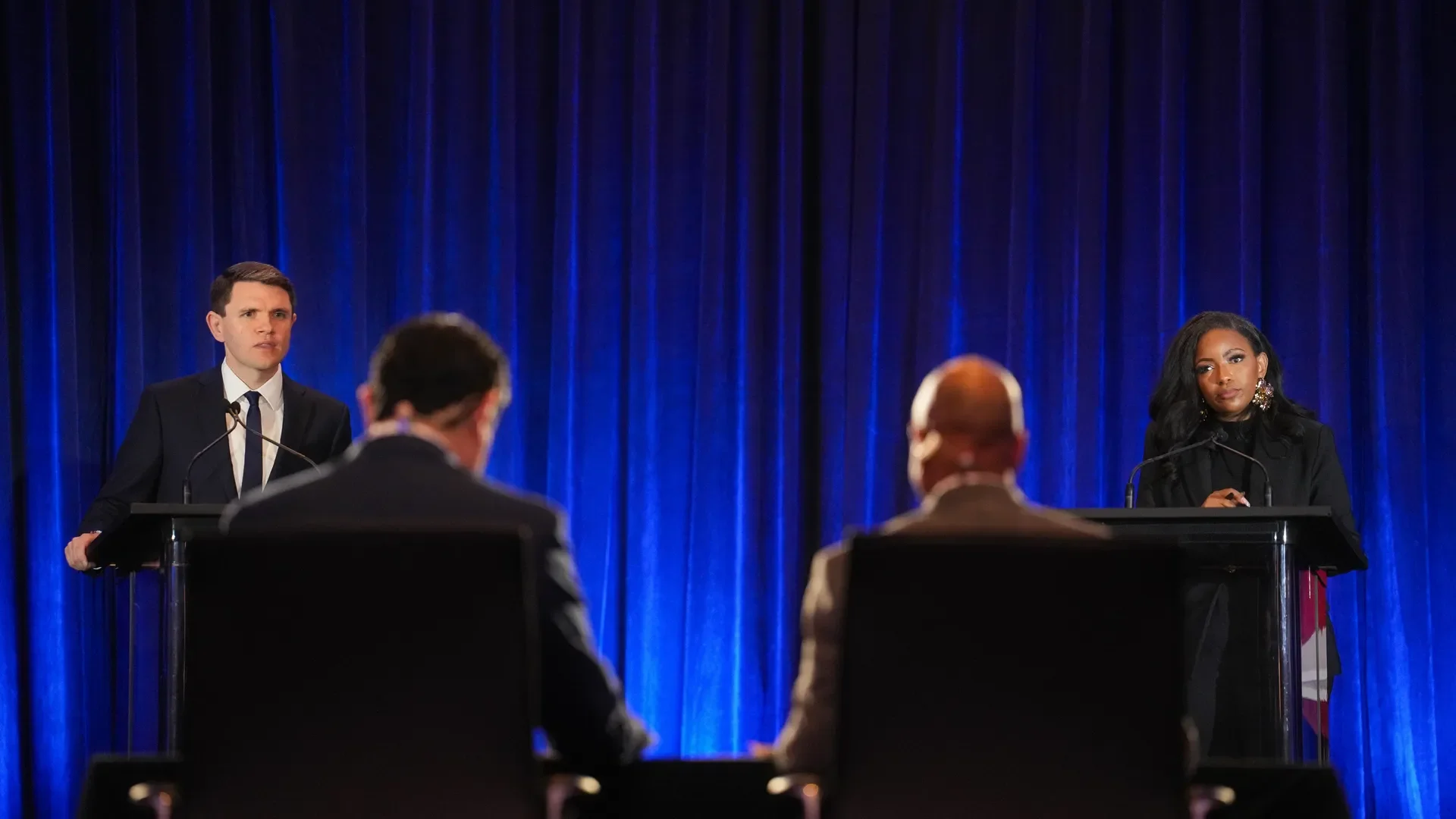
On primary day in Texas, Democrats are choosing between two very different bets for a U.S. Senate seat in a state where their statewide drought has stretched for more than three decades.
Tonight’s spotlight is on U.S. Rep. Jasmine Crockett, the Dallas firebrand with a national profile, versus state Rep. James Talarico, the Austin lawmaker and pastor-in-training running a faith-inflected “politics of love” campaign.
The stakes go beyond personality.
Texas Republicans are fighting their own high-voltage Senate primary (incumbent John Cornyn vs. Ken Paxton and Wesley Hunt), with expectations of a runoff if nobody clears 50%.
Democrats, meanwhile, are trying to decide what “winning” even means in 2026: maximize base turnout with a confrontational, anti-MAGA messenger or attempt a broader persuasion play that tries to peel off moderates and disaffected Republicans.
If you’re looking for the cleanest, most concrete reason Crockett could lose, it’s money. There is an imbalance in paid communication during the stretch when low-information voters finally tune in.
By the end of early voting, Talarico had outspent Crockett on advertising by nearly five-to-one, according to AdImpact figures cited by The Texas Tribune. The Tribune reports Talarico spent $15.3 million through his campaign compared with Crockett’s $4.3 million; a pro-Talarico super PAC added $7.7 million, while a super PAC boosting Crockett had spent under $500,000.
That kind of saturation matters most in exactly the kind of election this is: a primary where lots of voters decide late, and where “who have I been seeing?” becomes shorthand for viability.
The second pillar of the “Crockett will lose” argument is momentum.
Two credible snapshots tell a story of tightening:
UT/Texas Politics Project poll (Feb. 2–16): Crockett led 56%–44% among Democratic primary voters.
*Emerson/Nexstar final survey (released March 1): Talarico held a narrow edge, 52%–47%, and the poll notes the margin-of-error caveat explicitly.
If that late Emerson read is even directionally right, it implies the race became a turnout-and-closure contest: who banked votes early, who captured late deciders, and whose message survived the closing barrage.
Emerson’s crosstabs also sketch why this matchup can flip late. Crockett’s strength is concentrated and intense while Talarico’s appears broader across groups that can dominate a low-turnout primary.
In Emerson’s final survey, Talarico led among white voters (71%–29%) and Hispanic voters (60%–39%), and among men (58%–41%).
Crockett led among Black voters (80%–18%) and women (51%–48%).
If Crockett’s base shows up at scale, she wins. If turnout is more heavily driven by the voters Talarico’s campaign (and ad buys) have been targeting, he can edge her out even if her supporters are more enthusiastic.
This race has also been fueled deliberately by a meta-question: Who do Republicans want to run against in November?
Texas Tribune reporting describes multiple Republican efforts that effectively elevated Crockett’s profile while framing her as a general-election gift: Gov. Greg Abbott ran ads against her during early voting, and a Republican-aligned group blasted texts attacking her stance against ICE—messaging that could land as a general-election liability but as a primary credential.
Tribune reporters also detail the “Republicans are boosting Crockett” argument being used by pro-Talarico forces, turning GOP trolling into an actual intraparty weapon.
That dynamic cuts both ways:
It can help Crockett by letting her say, in effect, “If they’re spending to stop me, I’m the threat.” But it can hurt her if enough Democratic primary voters internalize the idea that GOP strategists see her as the easier November opponent.
None of this means Crockett is “supposed” to lose. She entered the race with higher name recognition among Texas Democrats, and UT’s polling shows her viewed favorably by Democratic voters at levels that suggest real goodwill, not just notoriety. She also picked up a last-minute jolt when Kamala Harris recorded a robocall urging Democrats to back her.
In a close race, that kind of validation can matter, especially if it reaches reliable primary voters who don’t live online but do still respond to party cues.
Talarico’s pitch, by contrast, is that Texas can’t be flipped with base turnout alone. Democrats need a nominee who can expand the coalition, soften the partisan temperature, and make culturally moderate voters feel invited rather than indicted. That’s the core strategic split described in both AP and Texas Tribune coverage: Crockett leaning into mobilization; Talarico selling unity and outreach.
None of this guarantees a Crockett loss. She’s had real advantages, including strong support among Black voters in the UT polling and a late jolt from a Kamala Harris robocall. But the thesis is simple: Crockett ran the better identity campaign (visibility, edge, base passion). However, Talarico appears to be running the better conversion campaign (paid reach, persuasion, coalition expansion, and a closing narrative about electability).
And in a close primary, conversion usually beats visibility.