

The “Deep State” Isn’t a Cabal. The Permanent Government That Keeps America Running
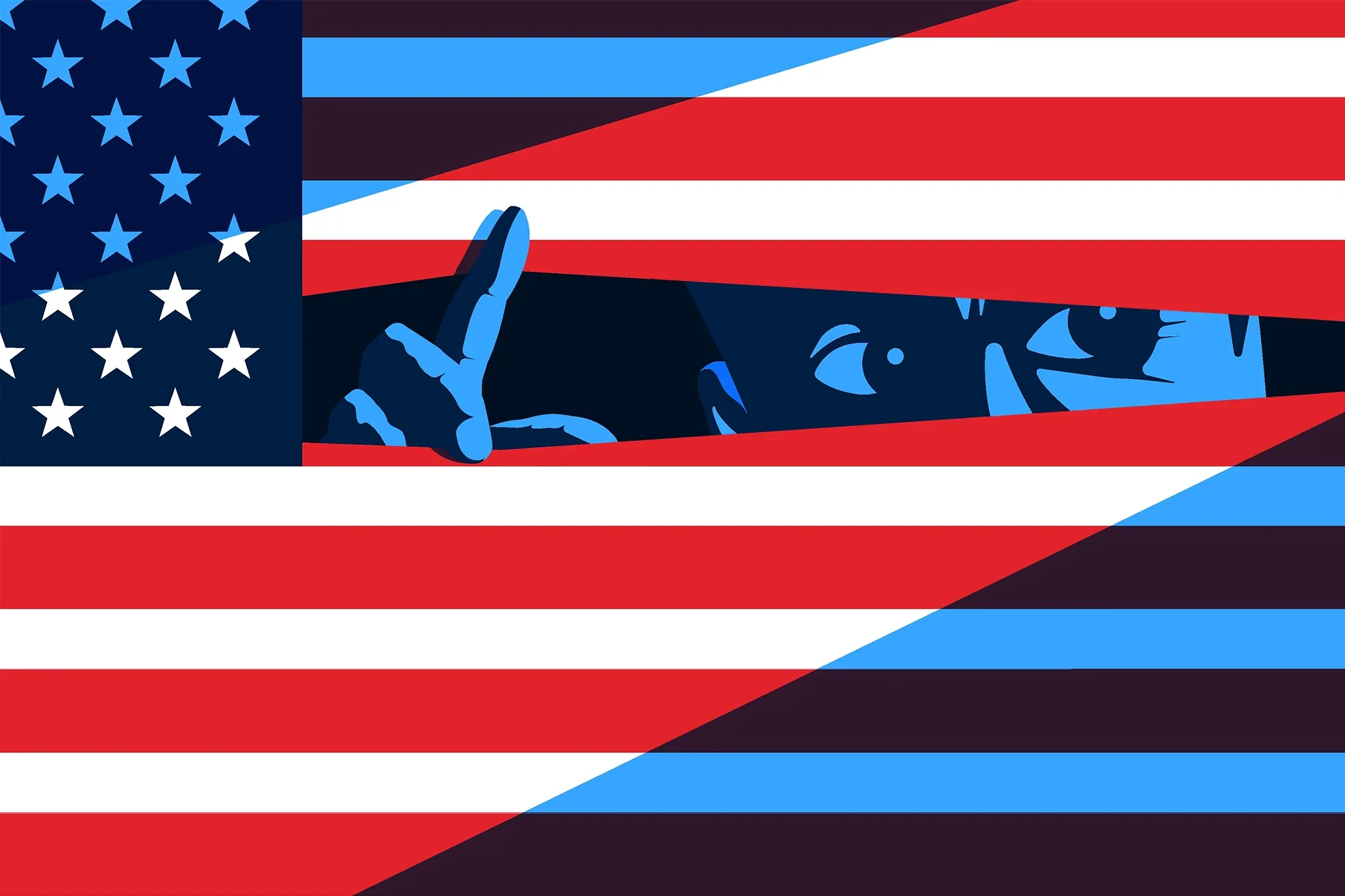
On Inauguration Day, America performs its favorite ritual: the transfer of power. Flags. Oaths. Motorcades. A new face at the Resolute Desk.
And then—quietly, immediately—the country keeps moving as if nothing happened.
Flights still land. Social Security payments still go out. Disease outbreaks still get tracked. Markets still get regulated. Threat streams still get briefed. The machinery hums with the same low, institutional certainty it had the day before. That continuity is not an accident; it’s the design.
Call it the “administrative state.” Call it the civil service. Call it the permanent government. Call it—if you want to speak in the language of modern political suspicion—the “deep state.” Call it whatever you want. But we should be honest about what we mean, because the phrase carries two very different definitions that people keep collapsing into one.
Being Centered’s read:
If a word can mean “shadow conspiracy” and “career workforce,” it will be used to confuse you on purpose.
1) What “Deep State” Originally Meant and What Americans Usually Mean Now
Historically, “deep state” referred to something darker than mere bureaucracy: hidden security networks operating beyond democratic control, often associated with countries where militaries, intelligence services, and informal power brokers could override elected leaders. The phrase is strongly tied to the Turkish concept derin devlet—a “shadow or parallel system of government” involving unofficial actors shaping policy behind the scenes.
In the United States, though, the term has largely been repurposed into a blunt instrument: a catch-all label for the people and institutions that don’t change when elections change—career officials, agencies, inspectors, analysts, attorneys, regulators, professional staff. Brookings captured this tension by framing the fight as conspiracy vs. rule-of-law bureaucracy: are officials thwarting a president out of partisan spite, or are they bound to laws and procedures that outlast any one leader?
That distinction matters because America absolutely does have a permanent governing apparatus. What’s contested is whether it’s *illegitimate*.
Being Centered’s read:
Democracy doesn’t only live in elections; it lives in whether institutions can say “no” to power without becoming power.
2) Why Presidents Feel Like “Stewards”
Presidents arrive as an archetype with a mandate and a mood. But the presidency sits atop a system built to resist sudden swings because sudden swings can be fatal when you’re running a continent-sized republic.
A big part of that resistance is structural: agencies exist to implement laws through detailed rules and programs that Congress often can’t write line-by-line. That’s the administrative state in plain terms.
Another part is personnel: the modern civil service was deliberately created to reduce political patronage—jobs handed out as spoils—and replace it with merit hiring and protections against political firing.
The Pendleton Act (1883) is one of the key turning points: competitive exams, merit-based selection, and constraints on political retaliation.
Put those together and you get the basic reality many voters sense but rarely name cleanly:
Presidents steer.
Institutions persist.
Implementation is power.
So yes—presidents often function as stewards of a state that is larger than them, older than them, and partially insulated from them by law.
Being Centered’s read
A country can survive bad leaders if its systems are sturdier than its personalities.
3) Where the “Deep State” Power Actually Lives (No Cloaks Required)
You don’t need a secret cabal to have durable, hard-to-dislodge influence. You just need continuity + expertise + discretion + information.
Information advantage
Career agencies hold the files, the data, the threat assessments, the institutional memory. In any complex organization, the people who know where the bodies are buried (sometimes literally, usually metaphorically) can shape what decisions are even *possible*.
Expertise advantage
Regulation, logistics, epidemiology, intelligence, procurement, budget execution—these are professions.
Elected officials can set priorities, but they rely on professionals to translate slogans into systems.
Discretion advantage
Laws don’t enforce themselves. Enforcement requires choices: what to prioritize, what to audit, what to prosecute, what to warn, what to ignore. Those choices are often made mid-level—quietly—where politics becomes procedure.
Time advantage
Presidents get four years. Bureaucracies get decades.
This is the mundane truth behind the mystique: America is guided less by smoke-filled rooms than by paperwork, process, and precedent.
4) Why This Can Be Good—Even Patriotic
Government isn’t only grand strategy; it’s services. When institutions persist across administrations, the country doesn’t have to reinvent basic functions every election cycle. That’s stability—often invisible until it’s gone.
A professional workforce is meant to be hired and promoted based on ability rather than partisan loyalty. The merit principle exists precisely to reduce favoritism and political capture of day-to-day administration.
Bureaucracy, at its best, is how rule-of-law becomes real life: standards, enforcement, due process, recordkeeping, audits, compliance. Brookings’ point lands here: if officials are sworn to law rather than to a person, that friction can be a democratic feature, not a bug.
5) The Problem: A Permanent State Can Become a Permanent Interest
Here’s where the pro-“deep state” argument must mature: continuity can protect the public, but it can also protect itself.
The core tension is autonomy vs. accountability. Too little autonomy and government becomes pure spoils—every election a purge, every agency a campaign office.
Too much autonomy and you drift toward an unelected class of decision-makers with weak democratic checks.
That’s why fights over civil service protections keep returning. A vivid current example is the push to reclassify certain policy-influencing roles in ways that reduce job protections—argued as “accountability” by supporters and “politicization” by critics. In January 2025, an executive order reinstated and modified the framework commonly referred to as Schedule F (renamed “Schedule Policy/Career”), explicitly emphasizing removals tied to faithful implementation of presidential policy.
News coverage of the same initiative described plans affecting tens of thousands of workers and framed it as part of a broader struggle over what some politicians call the “deep state.”
Whatever your politics, this debate reveals the real battlefield: who controls the permanent government—law, norms, and oversight… or loyalty tests?
6) A Better Way to Say It: The “Steady State,” Not the “Deep State”
If you want to defend the system’s importance without sliding into conspiracy language, borrow a cleaner concept: **the steady state**—the durable layer of institutions that makes America governable across generations.
Then the real civic question becomes practical, not mystical:
1) How do we keep expertise without elitism?
2) How do we keep continuity without impunity?
3) How do we keep discretion without secrecy?
Some answers are unsexy but real: stronger inspectors general, clearer statutory mandates, modernized congressional capacity to oversee agencies, better transparency and recordkeeping, tougher ethics and revolving-door rules, and whistleblower protections that actually work in practice.
Being Centered’s conclusion
The country needs systems that refuse to become gods.